Sunday, February 3, 2013

Whats goin' on?! Well, I'll tell ya....oh, need a cover!


Hell, I'm Excited...and Yes! There is Medication for That!


This is worse than writing your own resume...honestly.  See, all books require 'descriptors,' which are wonderful exercises in self-validation, a pompous kind of celebratory self-delusion and like dark chocolate, designed to seduce a potential reader out of their hard-earned cash.  So, here we go!


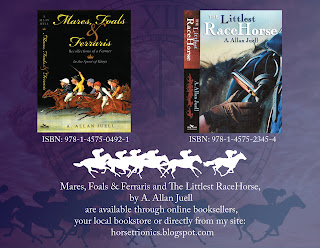
But!!!! My kingdom for a cover!!!  Let's see, we have:  Thanks to Sandra Mesrine......we got one.


The Plot:


Small matter of an apocalyptic nuclear kind of...misunderstanding.

 A
Caused by these fellows:


Which in turn led to many mothers taking their children to underground macaroni and cheese hide-outs: 


Of course, since I wrote the damn thing, there must be a horse involved.  No, not this one. That's Rocinante.  He's...well, he has issues.


Instead, we have a horse that is born with certain political problems.  No, not the legs....but there must be a rags to riches element or at least some reason for hope...Hope?  From a notorious cynic?  Well, why not. If you take cynicism all the way around the barn it becomes...delusional?  Hmm.

But horse grows up and since nobody explained to him his limitations, he ignores them.  Typical horse.

 Okay...we also have a plane crash...no, the Russians weren't involved.  And...


A new fashion innovation that changes women forever...well, ten days, two weeks max.  And sorry, about as close to farriery as this book gets.  However, I have included at least 127 seperate citations concerning hogs, Bourbon and the advent of indoor plumbing in the Commonwealth of Kentucky.  And hams. 


Has to be a young girl involved and I added a young man just for balance and an overall sense of doom over what happens shortly after puberty.  He is a smart ass and based the author's own experiences shortly after puberty which sadly, have continued for decades.

 Oh, not the girl pictured. She looks almost suicidal about the whole thing. But girl discovers horse shows as a hedge against the drama of the whole world ending on a Thursday.  That almost leads to a bankruptcy of hope, except that fashion turns out to be more profitable than corn, tobacco, pigs...horses.  Remember that if your oldest son gets a notion about growing cabbages for a living.

Then, everybody goes to the races.  It's okay, we all know the world didn't end on the last week of October, 1962, because it is now November of 2013.  We didn't do the Mayan thing either. 


And as I promised my editor....no fruitcake in this book.  Or Hostess products.  We're heavily into Velveeta on this one though.  Sorry.

Release date issues:


Ha, ha....Notice the date.  How about Derby week 2013, hopefully.  Which means more like Preakness time. Off to publisher in 10 days.  Then I obsess over the "what if's."  Geez.  Okay, that didn't work out either which meant it was finally released in October of 2013.  Homeland Security didn't like the part about a Russian admiral...


About the book -- short

 Late October, 1962.  The US and the Soviet Union stand toe to toe, poised to unleash their nuclear arsenals over the deployment of offensive missiles in Cuba – a mere 90 miles off the coast of Florida.  This is the Cold War, suddenly too hot to touch.  Apprehension flows relentlessly down the irrational corridors of chaos and panic – personal choices driven by the political realities of a world gone mad.  A pair of kids, suddenly cast adrift by the week’s escalating events, find themselves forced on a journey not of their making.  To Paris, Kentucky and the farm of one Bobby Lee Hancock – just possibly the most cantankerous horseman in the whole state.  And waiting there, a young Thoroughbred colt…doomed by the peculiarities of his birth.  Or so the old customs had always dictated.  Surprisingly, the world didn’t end that turbulent week after all.  But the dreams, ambitions – the road the heart travels, did.  Forever.
 
Add for long:

 “That damn Kennedy’s gonna get us killed maybe…or worse!” as Bobby liked to spout.  But the young President had already moved beyond the brink of a final apocalypse – opening a second, perhaps more volatile door by questioning the very core of American values.  Civil rights, the desires and ambitions of the country’s largest minority – women; and the wider responsibilities inherent to leading the world’s greatest democracy through an era restless for change.  The 1950’s were the calm between very different storms – one engulfing the world, the second threatening the nation.  But often, that ‘change’ was personal and highly private as well, especially for children caught in a sudden and seemingly unrelenting tempest.  And just as often, the salvation, perhaps life’s balance itself has four legs and a tail.  Just a horse?  Maybe not.
 
 
About the author – short and long:  Well, actually who cares?  Suffice to say that he is unemployable under most circumstances.
 
A. Allan Juell has been writing about horses and the people they own for over 35 years.  His work has appeared in periodicals such as Washington Thoroughbred, EQUUS, Chronicle of the Horse, Western Horsemen, Anvil Magazine and many others, both regional and international.  He picked up a few obscure literary awards along the way, as well as copious amounts of…well, ‘enlightened’ criticism.  This is his second book.  He published “Mares, Foals & Ferraris” (Dog Ear Publishing), in 2011.  That book was a serialization of columns first penned for the Washington Thoroughbred in the 1980’s.  He holds a degree in history/international affairs, and currently resides in Port Orford, Oregon.  Originally from Seattle, Washington, he has traveled extensively about the planet, from New Zealand to Mongolia and many of the odder stops in between.  He continues to abuse the English language at Horsetrionics.blogspot.com and Histryonics.blogspot.com.  Rumor has it that another obscure adventure is in the works – mostly likely sooner than later and may involve....


And yes...will probably change this at least ten eleven twelve times!  (I did actually.)


So, get a copy (or 10) for Xmas and prove to your friends that you have incredibly bad taste in literature.  It's for a good cause.  Going to France to get a hew hip joint.  Have heard fascinating things about French nurses...not good, just fascinating.

Sunday, December 23, 2012

A Christmas Fairy Tail...Fast Rudy


"Twas the night before Xmas                           
And all through the house
Not a creature was stirring
Not even a mouse..."


That's because the cat ate them.  He's over in the corner gift-wrapping the bodies.  I'll try to act surprised in the morning.  And such is life on a farm...my farm anyway.  So after the turkey and gravy, my traditional purple mashed potatoes and too much cheer, I relax by the fire and dream improbable dreams.  Things like cheap hay, self-cleaning stalls and mares whose ovaries produce more than mediocrity and despair.  But no, I get this instead:


Fast Rudy


nce upon a time, in a faraway land, a young lad named Jack was sent on an important family matter.  Wearily trudging through the countryside, Jack hoped to trade his last bag of magic beans for a $5000 claimer.  Jack’s mother, who trained some runners at a local track was having a terrible season.  In fact, she was down to her last horse, a sad looking gelding named Fast Rudy, who had never been able to get in a race because of a red spot on his butt.  It really wouldn’t have mattered in most cases, except that it had been overlooked on his registration papers, a discrepancy that the evil Sheriff of Nothinghappening happened to notice, who coincidentally moonlighted as a racetrack identifier, duly appointed by the governor to rob the poor and stop those 2-5 favorites from walking away with a race.  He also had a ‘thing’ for Mrs. Jack, who was widowed after her husband stepped on a land mine in Cambodia.  There was also this bony appendage on Fast Rudy’s head, but so far everybody accepted the notion that it was simply a training device – like a run-out bit, only bigger and uglier.

Fast Rudy's Odd Appendages!
[image:flickr]
 
     Fast Rudy had been a tremendous disappointment for Mrs. Jack.  The best he could do was run for a $2500 tag, but even so, he couldn’t pick up a check if he couldn’t run.  Plus, he was coming back from a training injury, had coughed all summer and was on the steward’s list for erratic running.  By now, it was December and Fast Rudy’s prospects for picking up any kind of check were almost as good as his chance for getting a meal.  Zero.  But for some reason, Mrs. Jack still believed in him.
 
 
     Meanwhile, Young Jack was having his own problems.  The search for a $5000 claimer ended at a small shack.  The owner, a wizard named Obi Wan something or the other, gave him the grievous news.  Voice crackling like a broken welder, the old fellow spoke:  “Yes son, all of them have gone.  Gone away to run for big money at a place called Santa Anita.  Can I interest you in a Millennium Falcon?  Low mileage, recently overhauled.  Your girlfriend would really like the color."
 
     “Santa?”  And I don't have a girlfriend."
 
     “Just a coincidence,” the old wart answered.  “What about the Falcon?”  This thing'll get you lots of girlfriends!"
 
     Depressed, Young Jack moved on.  Someone was following him, though.  After a few miles, the stranger caught up with him.  “Hey, pilgrim,” the tall man said.  “John Ford is shooting a movie around here, and well, I can’t find him anywhere.  Ya happen to know where the Monumental Big El Dorado  and Rio Bravo Big Monumental Valley is?”
 
     “Well, no.  I’m trying to find a race horse.”
 
     “Ah, hell, give Mickey Rooney a call.  He’s done a lot of those pictures; little guy, lives in LA.”
 
     “Okay.  Say, where’s LA?”
 
A mysterious stranger...
     “Waaaaal, over thar pilgrim.  Say, have you got a spare cigarette?”
 
     “I’m sorry sir, but they haven’t been invented yet.”


The fairytale unravels...
      A few miles down the road, Jack came upon the Scrooge Hay Company.  That’s it, he reasoned.  I’ll trade these magic beans for a ton of hay and a bottle of liniment.  That’ll at least get Fast Rudy through the winter.  Maybe by then¼
 
     Young Jack’s thoughts were immediately interrupted by the appearance of old man Scrooge himself.  Bundled against the cold by an over sized down jacket, only his lips peered out at Young Jack.  “So, you want John Gotti burned, huh?  You must be Lucky Lasagna from Jersey.”
 
     “No sir, I need some hay.  I have to feed my horse.  A ton in exchange for these magic beans.  Oh, and I need some liniment.”  Young Jack held out his hand, showing the six multi-colored beans.
[image:digginfoods.com]
 
     “Magic?”  old Scrooge inquired, his face creeping out of his coat.  “Just what kind of magic, dear boy?”
 
     “With these beans,” Young Jack whispered.  “You can meet Julia Roberts.”
 
     “Really!  She your girlfriend?"  Scrooge said.  His smile gave away the value of the trade.  “All right young man, I’ll give you nineteen bales of hay and a half bottle of liniment.”
 
     “Nineteen?!”
 
     “They’re heavy bales, my boy.”  Scrooge countered.  Take it or leave it.  If you don’t buy it, I’ll sell it to the Russians.  They’ll buy anything.”
 
     “But sir, Russians haven’t been invented yet.”


     In the meantime, Mrs. Jack was trying to figure out what to do next.  The race meet was scheduled to close on December 24th, a mere five days away.  The final race of the card, The Last Gasp Handicap, run at 22 furlongs, looked to be the spot that Rudy had always needed.  With a purse of five golden rings, three French hens and a bird in a pear tree, a victory would save Mrs. Jack from the poor house.  Eat the birds, hock the rings.  Real simple.
 
     But there was still the problem with the red spot on Rudy’s derriere.  Once again, she confronted the assistant identifier, a one-legged hunchback related to the wicked Sheriff by marriage.  His name was Quasi-Forget It.  And boy, did he smell bad.
 
    “Forget it!” he said bluntly.  “No, no, no, never!  Not in a million, zillion years!”
 
     “Is that your final word?”
 
     “No, this is.  Forget it!”
 
     Crushed, Mrs. Jack led Fast Rudy back to his stall.  There were no oats for his dinner, no hay and hardly enough straw for his bed.  Knowing how hungry he must be, she went to the adjoining tack room and searched vainly for something to feed to him.  In her haste, she dislodged something from a shelf that fell into Rudy’s feed tub.  Soon, she heard the horse thrashing about his stall, a sure sign of colic.  Rushing to his door, she arrived just in time to see him fall to the floor.
 
     “Oh, my gosh!  Rudy’s sick!”  she wailed.  Glancing around the stall, she finally found the source of Fast Rudy’s distress.  Lying in his feed tub was a half eaten fruitcake.  And was it ever hard.
 
     Summoning Dr. Gauze, the kindly veterinarian, the prognosis seemed grim.  “When you eat fruitcake, you pay the price,” he said.  “It doesn’t look good.”  He left Mrs. Jack with three cases of bute, a gallon of Banamine, electrolytes, a flu shot and a can of hoof dressing.  He promised to stop by later.  Fast Rudy only groaned.  "Say, did your boy ever find a girlfriend?  You know, he's gettin' on 25 years now...should have a girlfriend.  Looks kinda funny otherwise...you know, light in the loafers."
 
     Tears rolling down her cheeks, she slowly walked back toward the tack room.  Her progress was stopped by the sight of Young Jack pulling up with a cart full of what appeared to be blue hair.  Young Jack looked miserable as a toad.
 
Blue hay...
[image: atooms.com]
     “Fast Rudy’s terribly ill,” she said softly.  “It really looks bad.”
 
     Young Jack’s face drooped even further.
 
     “What’s in the cart, son?”
 
     “Hay, or at least it used to be.  It got rained on.  I’m afraid that’s all I have to show for the magic beans.  I thought we could at least feed Rudy, but now¼where is he?”
 

     As Young Jack jumped off the cart and ran to the stall, Mrs. Jack was interrupted by her favorite jockette, one S. White and her seven agents.  While the group of bickering agents surrounded Mrs. Jack, S. White slipped into the stall where Young Jack was sitting, Fast Rudy’s head cradled gently in his lap.


[image: 123rf.com]

     “Poor Rudy,” she said, her eyes beaming down at Jack.  “Maybe this will help.”  Leaning down, she kissed Fast Rudy on the forehead.  As Jack’s eyes me S. White’s, the world seemed to come to a stop.  For a brief second, they were in Paris, sitting
at an outdoor cafe, drinking red wine and eating escargot, not realizing that they were snails.
 

     Outside the stall, Mrs. Jack had finally beaten off the seven agents with her broom.  S. White wished Mrs. Jack well, slipped Young Jack a card for a motel in Stockton and disappeared into the darkness, leaving Young Jack with some throbbing things and a very sick horse.
 
     But things change fast in a fairy tale.  Four days later, Rudy was able to pass the fruitcake, and while one stall cleaner ended up hospitalized, the horse was on his feet, the fire once again dancing in his eyes.  And to everyone’s astonishment, the red spot on his butt was gone – vanished!

 
     “Quick!” Mrs. Jack shouted.  “Let’s get him to the identifier before it changes.  We only have an hour till race time!”

 
     Arriving at the test barn, they were once again confronted by the wicked little assistant identifier.  “You again?!” Forget-It yelled.

 
     “But the spot is gone!” Young Jack countered.  “Ask Frosty.”

 
     Forget-It spun around, not knowing that Frosty, the overweight, albino steward had been standing there the whole time.

 
     “Well?” Forget-It inquired sarcastically.

 
     Frosty, sweating profusely, looked closely at Rudy’s butt.  No red spot could be seen.  “Boy, it’s warm,” he said.  “Don’t you guys think it’s warm?  I think it’s warm.  Whew, it’s almost hot¼

 
     “What about the damn spot?!”  Forget-It yelled.

 
     “Oh, that thing.  Anybody got any ice.  Ah hell, it looks fine to me.  The horse can run.  I gotta get out of here.  It’s too hot to stand around and worry about it.”

 
     With that, Frosty wandered off, leaving Young Jack and Mrs. Jack to watch as Forget-It applied the official tattoo.  As he quickly worked, the numbers and letters formed into an eerie XMAS 0 HOUR.

 
     “Just a coincidence,” Forget-It sniffed.


     “Waaaal, pilgrim, I reckon you got a race.  I could sure use a cigarette, but I guess they don't have any in this movie.  How come you don't have a girlfriend, pilgrim?  Most of my movies had one, but shoot, I always ended up with a noisy sidekick and my horse...he was a goodn'
 

     Young Jack spun around, but all he saw was a tall guy who walked like he had something wrong with his hips.

 
     Finally, it was time to run The Last Gasp Handicap.  Fast Rudy drew the number one hole.  Around the racetrack, a thick and menacing fog had settled on the course.  In the distance, lightning flashed.  The horses nervously pawed the ground.  S. White coaxed Rudy into the starting gate, an immense steel and wood structure that stretched across the entire track, quickly removed once the horses were released.  S. White shot Young Jack a quick little smile and mouthed the words, "Last Chance."  Young Jack just nodded.  Hell, he knew what the race was called.  "What!?" he finally shouted.  She just shrugged.

  The starter, one Claus Krinkle waited patiently while each horse settled in, waiting for a fair start.  “There they go!” the announcer yelled as Krinkle sprung the gate.

 
     Fast Rudy broke on top and quickly took command of the lead, Donner was second with Cheese Blintzes a close third.  As the horses disappeared into the fog shrouded backstretch turn, the racetrack suddenly went dark.  Out in the middle of the track sat the starting gate, its electric motors frozen in the fog and pitch-black night.
[image: paulickreport.com]


     “They’re going to hit it!” the announcer yelled, his voice unheard by the loss of power throughout the track.  The crowd gasped as the horses rounded the final turn.  Fast Rudy, at the head of the pack, could see the impending disaster.  Somehow, someway, the red spot re-appeared on his butt, like the trailing light of a caboose, shining brighter than ever before.  Illuminated in the ghostly red light, the horses followed Rudy safely around the crippled starting gate and once again vanished into the fog.  As the crowd roared its approval at the outcome of the race, the fog began to lift, the lights returned to brightness and the sound of pounding hooves gently faded away.  To everyone’s astonishment, the horses were gone, somehow lifted into the night on the wings of the fog.  As the crowd peered overhead, a small red glow emerged briefly from the clouds, only to vanish once again into the dark sky.  On the ground, the tote board flashed its message:  IT’S OFFICIAL!    

And the red spot slipped over a distant horizon...


Thursday, December 13, 2012

Farriers Defined: 1965 Federal Appeals Court Decision


Unusual Case Brings Farriery into the Federal Court for a Little Clarification...Maybe
 

[image:ncapb.com]

Bowie, Maryland - 1965: 
 
 
353 F2d 593 Taylor v. Local No. 7 International Union of Journeymen Horseshoers


I have added the actual court case numbers in case you are studying for the bar, live life anally-retentive, or like most instances, you assume I'm engaged in ribald fiction again.  It can be found at:  OpenJurist.org.  Fran Jurga's Hoofblog also referred to this case in a Sep. 29, 2012 column, (History: 1960's Racetrack Horseshoer's Union Court Case May Have...) [hoofcare.blogspot.com]  The principals in this case are not important, but the case did end up in Federal Appeals Court, 4th District in 1965 following an appeal by the plaintiffs on a lower court decision.  There were actually two cases involved (same principals), and the Appeals Court consolidated both cases for disposition.  More than anything, these cases were about semantics and the definition of what constitutes the business relationship between farriers, trainers and owners.  However, it entered the court system under the guise of a 'labor dispute' between racetrack shoers (platers), and owner/trainers operating on both sides of the border.  Three of the plaintiffs were Canadian citizens, but raced in both countries.  Now, this part you're going to absolutely love:  the whole thing really centered on some owners that didn't want to pay $16 to plate a runner, or concurrently, being denied access to their own guy.  Few things ever change, eh?

[image: ozfolksonaday,blogspot.com]
 
[images: property of teamsters.org]
A little background is in order:  The International Union of Journeymen Horseshoers (IUJH); today, simply the UJH, was formed in 1873 primarily to represent farriers employed by large livery companies.  Labor unions were on the rise, the Industrial Revolution looming on the horizon and immigration approaching its somewhat uncomfortable peak.  All forms of commerce, private transportation and agriculture moved by horse.  And organized Teamsters were one of the most powerful labor organizations from Chicago to New York.  The Teamsters and the IUJH shared a common heritage and purpose. Teamsters would refuse to drive any horse that did not bear the IUJH logo on its shoe.  And farriers could only acquire this stamp after passing the IUJH exam.  Mutual interest was more deeply ingrained here than mere professional courtesy.  This was about money, livelihoods, status and...put bluntly, what was seen as a foreign invasion.  Unions and shops were locked in a fierce contest over cheap foreign labor and the pursuit of profits.  Sound familiar?  Unions were not about to have their power undermined from the outside or the inside.

However, time and industrialization of the world moved on and while the Teamsters thrived with the invention of the truck, farriery declined steadily -- virtually bottoming out in 1960.  But it wasn't the end of the UJH, now more national than international for the organization found a niche in North American racing.  Why?  The 'rules of racing.'  Racing commissions throughout N. America demanded (and were sanctioned accordingly), to 'qualify' all participants engaged in the sport.  This the result of racing operating as a gambling venue.  The betting public had to be assured of the sport's integrity and the UJH was the only organization with the history and structure to fill racing's regulatory needs.


4th Circuit Court
[image: newmedia.com]
        Okay, back to the 4th Circuit Court.  For all intents and purposes, it appeared that a group of Canadian owners and some American converts decided that they didn't want to pay $16 to plate a runner -- or have no control over who did the work.  Evidently, the IUJH didn't have the controlling power it coveted on Canadian racing.  Further, it had become common for off-track shoers to work on Canadian tracks.  As such, prices were set by market forces and fluctuated wildly.  Like today, the quality of work also varied extensively.  However, on US racetracks, the price was set by the union -- membership in the union tightly controlled and re-enforced by those very 'rules of racing,'  contained therein:  access.  Meaning that the commission, a quasi-government, regulating body could and would enforce the dictate.  Hell, they had to.  Racetrack farriers had the power and right to shut the place down.  Not only by refusing to work, but by the supportive actions of the more powerful Teamsters Union.  In other words, no Bourbon for the Turf Club or much of anything else.
 
What set off this dispute, at Bowie Race Track in Maryland, was wrapped around the lack of union compliance in Canada.  The Bowie platers wanted a signed agreement from these Canadian owners to "use only IUJH members at Canadian tracks," or the farriers would refuse to work on their horses on the US side.  It was principle on one hand, but a Union rule on the other.  In some ways, the farriers were in a happy trap, because the price was set by the local chapter (themselves), and the shoers were subject to disciplinary action or expulsion from the Union for non-compliance.  Out of the Union meant you were booted off the track -- livelihood lost, as racing was the only consistent game going. 
 

Bowie Race Track -- 1900's

The owners decided to sue in District Court, claiming among other things that farriers 'were employees' on one hand and violating the Sherman Anti-Trust Act on the other.  The lower court ruled that the plaintiffs were indeed employees of the owners/trainers, but naturally threw out the anti-trust argument.  This merely led to an impasse.  The farriers were hoping for a ruling (under Norris-LaGuardia), that it was merely a labor dispute between independent contractors in a third-party arrangement.  But since the lower court ruled them to be employees, nobody was satisfied.  So back to court -- this time to the Federal Appeals Court in Richmond, Virginia. This suit was again brought by the owners who were dead set on getting a ruling under the Sherman Act -- the purpose being to break the IUJH by saying that the Union was, in effect:  price fixing.  On the other hand, IUJH members wanted their definition as 'employees' stricken down and their status as 'independent contractors' affirmed by a federal court. This had huge ramifications for both the present, and ultimately the future status as it defined farriers once and for all, including by the US Federal Tax Code.  Precedent setting you might say.
 
The Test: 
 
Singer Manufacturing v Rahn, 1889      
 
"The relation of Master and Servant exists whenever the employer retains the right to direct the manner in which the business shall be done as well as the result to be accomplished."
 
"However, complete control over the result to be accomplished is not enough to make an independent contractor an employee."
 
Splitting hairs?  Perhaps, but the Court had more to say:
 
"An employer has a right to exercise such control over an independent contractor as is necessary to secure the performance of the contract according to its terms, in order to accomplish the results contemplated by the parties in making the contract, without thereby creating such contractor an employee."
 
Numerous other cases supported the conclusion that some "reservation of control to supervise the manner in which the work is done...or to inspect the work during its performance...does not destroy the independent contractor relationship."  [Cited: Conasauga River Lumber v. Wade.]  "No one fact is controlling the 'totality of the circumstances must be considered.'"  Such as:
 
Points established in Appeals Court ruling: 
 
25.  Farriers provide own tools.
26.  Farriers are highly skilled.
27.  Farriers are paid by the job.
28.  Farriers control hours worked.
29.  Farriers regard themselves as independent contractors.  This established by their printed billboards, employment of apprentices, references in their constitution (IUJH) to trainers as 'customers, unilateral price-fixing and uni-lateral establishment of work rules. hours of work and bill collection methods.'
 
Points 30-33 merely added frosting to the cake.  30 noted that trainers make no deductions for Social Security, income taxes and carry no workmen's compensation insurance on farriers. They (trainers), consider farriers 'specialists.'  Similar to veterinarians.
 
Point 31:  Farriers decide whether to demand cash or extend credit.  Union rules on bill collection require that no farrier perform services for any trainer who owes money to another farrier. This was deemed legal by the court and is enforced to this day.  Well, most of the time.
 
 
Point 32:  "Farriers often receive retainers from trainers to guarantee first call on the farrier's services.  The payment of 'retainer' for this purpose is clearly indicative of an independent contractor, not an employee..."  Ha!  See where this came from?  All judges are first attorneys. How could they rule otherwise without damaging their own status.
 
 
Point 33:  The custom of the 'community' supports the conclusion.  Analogous to: plumbers, painters, roofers, electricians, etc..
 
{Should also be noted here that Point 24 in the ruling clarified farriers as being 'in the business of service, not retailing.' This was based on the notion that farriers bought their own shoes and made no direct profit on their resale.  Might want to remember this ruling if your state auditor decides that your business needs to charge sales tax.}
 
 
Farriers themselves testified during these proceedings:
 
 
Q:  "How does the trainer retain the right to direct you with respect to how much to cut or the type of shoe to put on?"
 
A:  "Yes. You have occasions that you might shoe a horse one day and you might not do it just right, and the trainer will tell you, maybe you took too much off or maybe you didn't take enough off, how about adjusting the foot or something to make it -- try to make it the same or whatever he wants."
 
 
Q: "And after you get him standing, what do you do then?"
 
A:  "Pull the shoe off, trim the foot?"
 
Q:  "Now, do you receive instructions as to to pull the shoe off?"
 
A:  "No."
 
Q:  "Well, now you indicated that those kind of instructions [ed: concerning lowering or raising heel, etc.] are given to you by the trainer at the time he decides to use your services.  At the beginning, he tells you those kinds of things. I like the toe short or I like it high or low or whatever."
 
"Now, do you tell me he repeats that instruction to you every time you come into there and shoe his horse?"
 
A:  "Well, if you go back and he happens to see a horse that is not shod to his liking, he'll tell you, I think you have missed this horse, maybe do something else to him, or change him."


The long and short of it was that the Appeals Court threw out the lower court's ruling, which in part was based on an Ontario (Canada) court ruling sought and affirmed by the same plaintiffs. The Appeals Court chose not to consider the Ontario ruling. Since they made a determination that farriers were indeed 'independent contractors' and NOT employees, a labor dispute did NOT by legal definition exist.  They also dismissed violations under the Sherman Anti-Trust Act as NOT applicable to the constitution of a labor union, further to the rules and regulations of a state regulatory body, i.e., the Racing Commission.
 
Who decides?
[image: diytrade.com
The ruling did settle, once and for all (short of the Supreme Court), just who or what a farrier is by legal standard, establishing the parameters of a business relationship that normally functions on little more than goodwill and good work. However, it did usher in later litigation, (in and out of the courts), over the relationship between UJH and the various state racing commissions.  In some cases, the commissions themselves were accused of being accomplices on a 'restraint of trade' basis -- arguing that the Union was using the 'rules of racing' (which vary in all 38 racing states, not to mention Canada), to maintain a 'closed shop' working environment.  On a purely theoretical level, most were.  But in these cases, the commissions were targeted in the claims, rather than the Union itself.  The outcome of these various actions have yet to be completely resolved, indeed may never be while the racing industry continues to operate, regulate and enforce on a state by state system.  Yeah, we never quite finished our Civil War. 
 
As for Bowie Race Track?  It stumbled along for another two decades, finally succumbing in 1985 to the fierce competition in the northeast brought about by the emergence of both OTB* and IOTB,** perhaps another case of one state waging financial war on another for the heart of the same bettor.
 
So...farriers should all give a shout-out to the 4th Circuit, Court of Appeals. At the very least, they know what you are. 
 
*Off-Track Betting.
**Interstate Off-Track Betting.  


 --